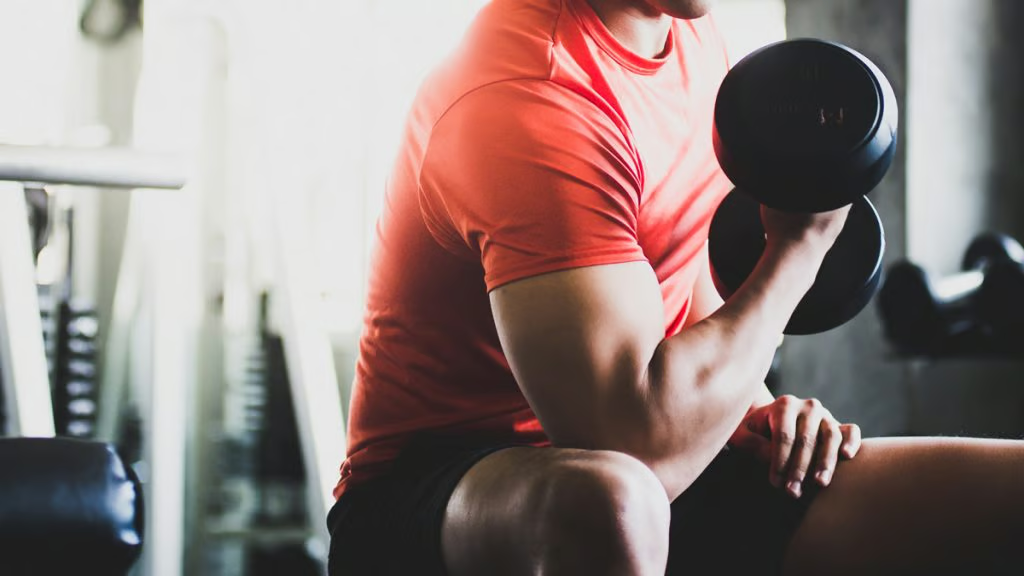
As a new year begins, many people commit to improving their physical fitness. They join gyms, start running programs, and set goals to get stronger, healthier, and more capable. These health goals are widely accepted as necessary for long-term well-being and safety. Firearms training, however, is often treated differently, viewed as something you “learn once” or revisit only occasionally. For responsible armed citizens, this mindset is a serious mistake. Firearms training should be approached the same way as physical fitness: as a continuous, lifelong discipline.
No one expects to lift weights a few times a year and remain strong, or jog once every few months and stay in shape. Physical abilities degrade without consistent training. Firearms skills work the same way. Marksmanship, safe gun handling, draw stroke, recoil management, and decision-making under stress are all perishable skills. Without regular practice, performance declines, even if you once shot well or passed a firearms course years ago.

One of the most dangerous assumptions a gun owner can make is believing that owning a firearm automatically means being prepared to use it responsibly under pressure. Buying a firearm or completing a permit class is the starting point, not the finish line. Equipment evolves, personal circumstances change, and skills fade. Just as physical strength and flexibility decrease with inactivity, shooting proficiency declines without deliberate maintenance.
Fitness training and firearms also share another critical principle: progress requires structure. Effective fitness programs are not random workouts; they are built around goals, consistency, progression, and accountability. Firearms training should follow the same model. Simply going to the range and firing a few magazines at a static target from one distance is not real training. A responsible training plan includes fundamentals, drawing from concealment, movement, use of cover, reloads, malfunctions, low-light conditions, and decision-making, scaled to the individual’s experience level and legal environment.
Many fitness resolutions fail because they are vague or unrealistic: “I’ll work out more” or “I’ll get in shape this year.” The same pattern happens with firearms training: “I’ll shoot more” or “I’ll practice when I have time.” A better approach is to set specific, achievable goals. This might mean one structured range session per month, weekly dry-fire practice at home, attending one professional class per year, or tracking performance standards over time. Consistency matters far more than intensity.
Accountability plays a major role in both fitness and firearms proficiency. People are more likely to follow through when they have a training partner, coach, or scheduled sessions. Firearms training benefits from the same structure. Shooting with trusted peers, documenting practice sessions, seeking instruction, and honestly evaluating performance all improve skill retention. Left to chance, both fitness and shooting skills tend to fade as life becomes busy.
Another important parallel is responsibility. Physical fitness reduces your risk of injury, improves your ability to escape danger, and enhances overall quality of life. Firearms proficiency reduces the risk of negligent discharges, missed shots, and unintended harm. In a self-defense situation, your actions will be legally, morally, and socially scrutinized. Your skill level will matter, not only for your safety, but for the safety of everyone around you. Good intentions do not substitute for competence.
The new year is a natural time to reassess habits and priorities. Responsible gun owners should ask themselves the same questions they ask about fitness: Am I more capable than I was last year? Am I training with purpose? Am I maintaining skills that could save my life or someone else’s? If firearms training has been reduced to occasional range trips or outdated permit qualifications, it is time to adopt a more disciplined approach.
Firearms ownership is not just about rights; it is about responsibility. Carrying a firearm means accepting the obligation to maintain proficiency, judgment, and safety standards that reflect the seriousness of the tool. Just as physical fitness is a lifelong commitment to health and readiness, firearms training should be a lifelong commitment to competence and restraint.
As you set your resolutions this year, treat firearms training the same way you treat fitness: with structure, consistency, accountability, and humility. Because when seconds matter, preparation, not ownership, makes the difference.
The month of January has just flown by. My hopes are that those resolutions you’ve made are still active and fresh. After all, you’ve set those goals for a reason, get after it!!
Proper Repetitive Practice Builds Automatic Permanence!