

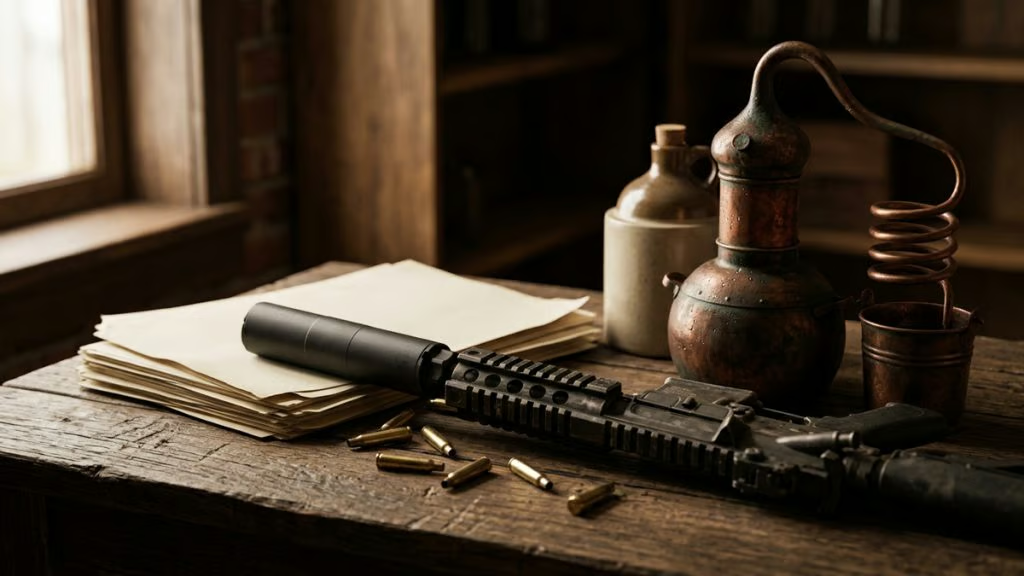
WASHINGTON — In the issuance of its first order list of the October 2026 term, the Supreme Court denied certiorari in 48 firearms-law-related cases, which is of little surprise given that the court typically takes less than a handful of 2A-related cases each year.
This past week, the court also denied cert on two more significant cases and took a case that, although unrelated to the Second Amendment, some legal experts believe could create a path to striking down major 2A hurdles.

The denial in Beckwith v. Frey leaves Maine’s 72-hour firearm waiting period in place, along with a split between the First and Tenth Circuits (normally a situation that invites SCOTUS review). The court also denied cert in Landrum v. United States, challenging the federal felon-in-possession ban.
These two denials were particularly frustrating to the 2A community, especially in light of the fact that the court did grant cert to a case challenging the 158-year-old law prohibiting the home-distilling of liquor.
On its face, Department of Justice v. McNutt, a lawsuit filed in 2023 by the nonprofit Hobby Distillers Association, has nothing to do with firearms, and even the most optimistic analysis would suggest that, if anything, it addresses government overreach.
However, some legal experts believe there is a thread of commonality in which a victory against the government in this case could be the legal foundation to strike down gun control measures, specifically the hotly contested National Firearms Act, which has been temporarily neutered through the zeroing of the $200 excise tax on most NFA items, leading to the relaxation of ATF enforcement, but has not been fully repealed.
The McNutt case rests on challenges to Congress’s taxing power and the necessary and proper clause, which gives Congress the power to “make all Laws which shall be necessary and proper for carrying into Execution” its listed powers, both of which are pillars on which the National Firearms Act was built.
Bill Kirk, Second Amendment legal expert and host of Washington Gun Law, a popular YouTube channel with over half a million subscribers, provided a cautiously optimistic analysis of how a victory in this case could create a path to overturning the NFA in an October 19 video breakdown:
The McNutt case is basically asking, can the United States government use the tax code to then heavily regulate individualized private activity? If the court rules that Congress cannot use the taxing power as a backdoor way to regulate individualized private activity, what then does that create as far as susceptibility and vulnerability for the entire National Firearms Act? It would literally create the legal blueprint, the legal playbook for how to properly attack the constitutionality of large portions of what’s remaining of the National Firearms Act.