
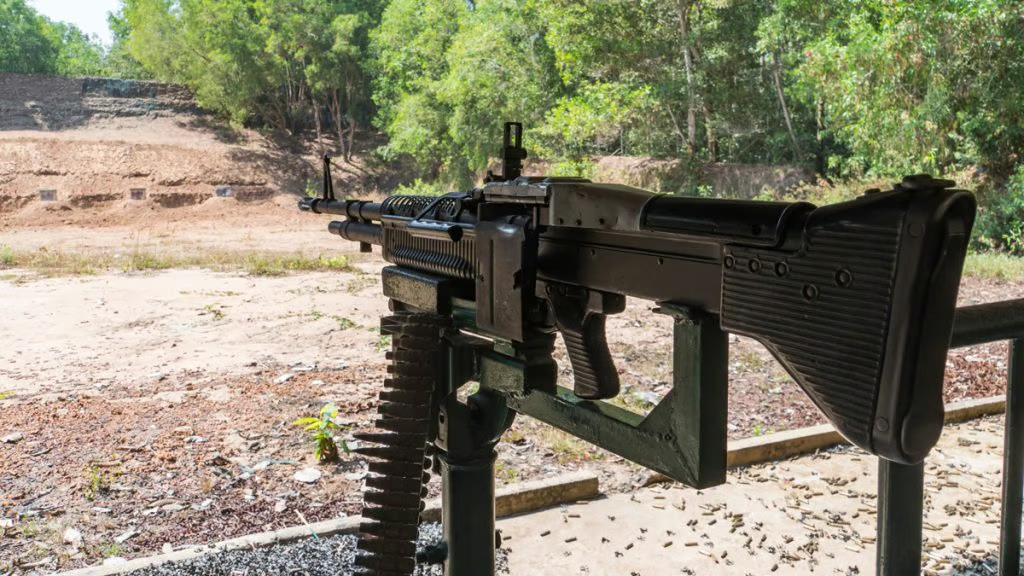
Following the lead of West Virginia and Kentucky last week, Idaho lawmakers introduced legislation that could legalize possession, manufacture, and sales of machine guns under certain conditions.
Lawmakers made the context clear, writing that they want to “Ensure that Idaho is positioned as a national leader in firearms freedom…”
Senate Bill 1349, introduced on March 2, establishes “trigger” conditions upon which the state would recognize the right of law-abiding citizens to possess machine guns – namely, the “repeal, invalidation, or unenforceability” of 18 U.S.C. 922(o), the governing law that currently prohibits machine gun possession by civilians (also known as the Firearm Owners Protection Act of 1986).

Unlike the West Virginia measure, which would create a law enforcement office to transfer machine guns to qualified persons – functioning under the letter of the law in 18 U.S.C. 922(o) – the Idaho measure relies upon four forward-looking contingent events:
- Congressional repeal
- U.S. Supreme Court decision
- Federal court injunction
- Attorney General notice of ceased enforcement
Upon the occurrence of any of these events, the bill states that “It shall be lawful under the laws of the state of Idaho for any person who is not otherwise prohibited from possessing firearms under state or federal law to possess, purchase, receive, sell, transfer, or manufacture a machine gun in this state…”
The bill also has provisions that, upon a triggering event, prevent the state from using any monetary resources to enforce “invalid federal restrictions.” That provision also precludes the use of “any personnel or other resources to enforce” along with “material support or resources.”
Once again, these bills collectively illustrate a shift of the Second Amendment battleground from the federal level to the local level, as we have pointed out numerous times.






Bullets fly a really really long way, just sayin