Blue states are engaging in a game of legislative copycat, with California following Washington state’s lead in introducing a bill to ban 3D printers in an effort to stop individuals from lawfully manufacturing firearms.
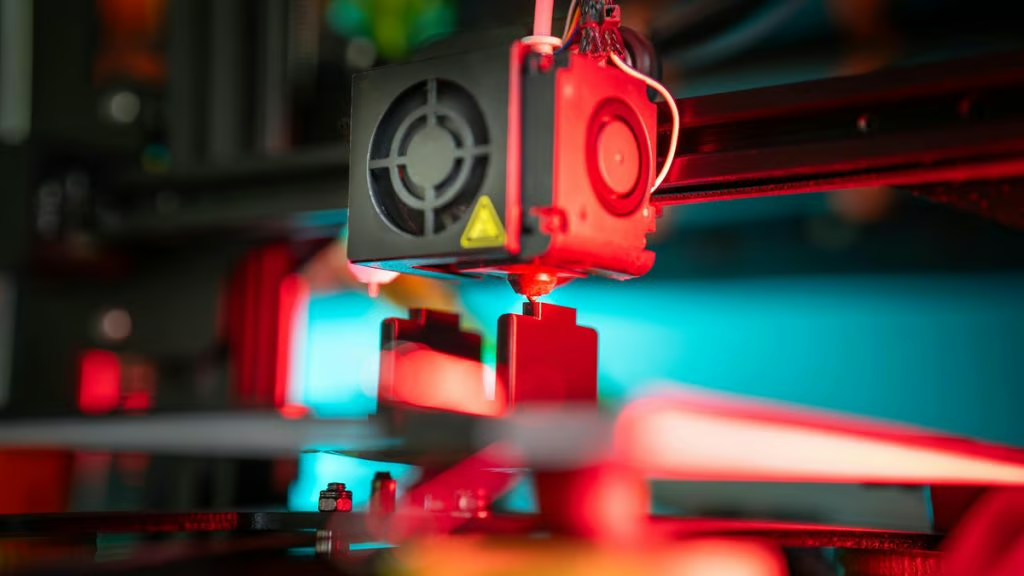
AB-2047 was introduced by Assemblyman Rebecca Bauer-Kahan on February 17. The act, entitled “California Firearm Printing Prevention Act,” mandates government-certified technological controls on all new 3D printers sold or transferred in the state starting March 1, 2029. The bill mandates “firearm blocking technology” that includes integrated hardware, firmware, and software, which uses a certified “firearm blueprint detection algorithm” to scan 3D files in order to prevent the printing of firearms or “illegal firearm parts”.
Strangely, the bill specifically calls out .50 BMG rifles, which, to our knowledge, are not only of little interest to the home firearm manufacturing community but are ill-suited to this type of manufacturing due to weight, recoil impulse, material strength, and a host of other reasons. This is unsurprising, as lawmakers are usually ignorant about the firearms they are attempting to regulate.

The bill expands on Washington state’s similar measure, introduced on January 12, by making it a crime to “knowingly disable, deactivate, uninstall, or otherwise circumvent any firearm blocking technology installed in a 3-dimensional printer with intent to manufacture firearms or to distribute, sell, or transfer…”
The bill also requires the Department of Justice or a state agency to investigate “known firearm blueprint design files and existing firearm blueprint detection algorithms,” and then provide guidance on how to equip 3D printers with the aforementioned blocking technology.
Americans have legally built their own firearms since the founding era, and the bill is problematic for its First Amendment implications in terms of suppressing code as free speech.
A recent decision by the Third Circuit Court of Appeals attempted to create classifications of computer code as it relates to free speech, treating “functional code” differently from “expressive code.” Given the number of cases arising out of attempts to block 3D printing, and its significance to both the First and Second Amendment, this is an issue that will likely rise again before the Supreme Court.
On February 6, California sued two Florida-based companies for hosting websites that allow people to download 3D files to print firearms and firearm parts.
The bill is currently pending committee referral and may be heard as early as March 20, 2026.