

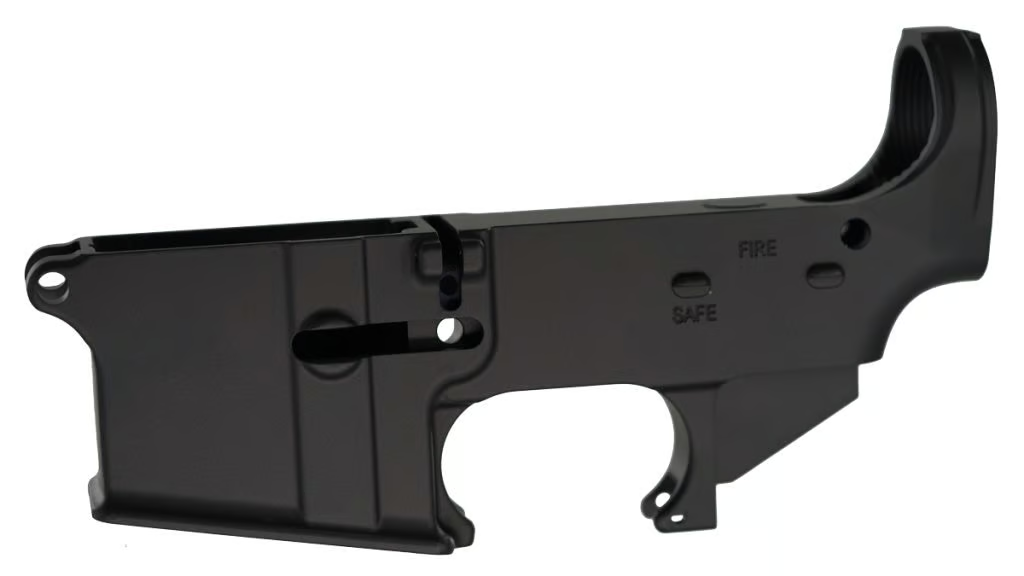
On April 27, the State of Pennsylvania entered into a stipulation agreement ending six years of litigation challenging its policy addressing partially manufactured (“80%”) frames/receivers as regulated firearms.
“This FPC victory for the people of Pennsylvania ends the threat of this immoral and unlawful policy for good,” said FPC President Brandon Combs in an email statement, adding, “Pennsylvania Attorney General Dave Sunday should be commended for recognizing something that his ideologically driven predecessors refused to recognize: that they wasted six years of time and taxpayer dollars defending the indefensible. Pennsylvanians can rest easier knowing that Governor Shapiro’s pet policy is in the trash can where it belongs.”

The settlement is noteworthy in that it’s illustrative of how long it can take for Second Amendment-related matters in particular to work through the legal system, but also serves as a warning in that the outcome does not prevent a future administration from enacting a similar policy.
The lawsuit, Landmark Firearms LLC et al. v. Evanchick, was filed on December 20, 2019, in the Commonwealth Court of Pennsylvania, challenging the Pennsylvania State Police’s new policy adopted under then-Attorney General Josh Shapiro’s 2019 “Legal Opinion,” which redefined and reclassified unfinished “80%” frames and receivers.
According to the complaint, the challenged legal opinion, “…putatively determined that nonfirearm objects are properly classified as firearms under the UFA (Uniform Firearms Act).” The case, which was backed by gun rights group Firearms Policy Coalition, challenged the state’s actions, claiming it invented an unauthorized, multi-factor “framework,” in violation of the Pennsylvania Constitution and other protections.
After over six years of litigation (which did include a preliminary injunction against the policy), including a nearly five-year span in which no notable legal actions occurred, the state agreed to a stipulation agreement, notably because it has revoked the offending policy under new leadership, and both parties now agree the case is moot. The stipulation agreement was approved by the court’s March 26 Per Curiam Order.
The court ended the matter “without prejudice” (meaning the lawsuit is dismissed, but it can be reopened later if needed). Critically, however, the court never issued a ruling on the constitutionality of the measure, meaning if and when a future administration enacts a similar – or even more aggressive attack on constitutionally-protected rights – there will be no precedent to reference in a legal challenge.
The life of these “victories” – secured at significant legal costs to both taxpayers and gun rights group members – is limited only to the posture of the current administration. As we’ve pointed out in the past, there is no mechanism to prevent a state from introducing unconstitutional policy or legislation.