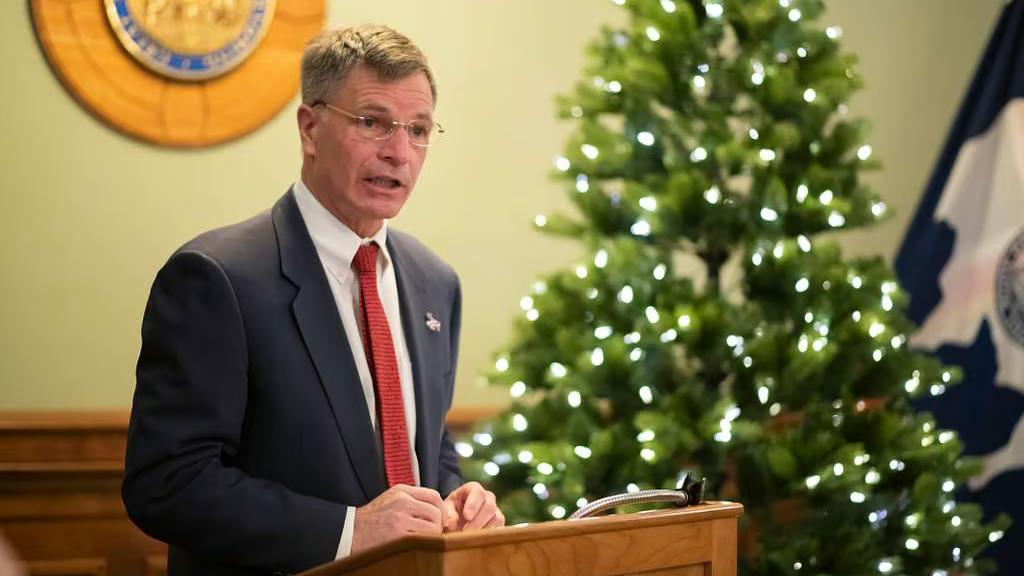
On Tuesday, March 10, Wyoming Governor Mark Gordon vetoed amendments to the state’s Second Amendment Protection Act on the grounds that the bill would hamper cooperation between local and federal law enforcement, despite specific exceptions written into the law addressing interstate crime enforcement.
SAPA was originally passed in 2022 and signed into law by then-Governor Mark Gordon in order to prohibit state and local officials from enforcing certain federal firearms regulations deemed unconstitutional. The law carried criminal penalties for violations and served as a significant barrier to Second Amendment infringements.

By way of reminder to our readers, in 2022, the Biden presidency was busy pushing massive anti-gun agendas, which even included the Office of Gun Violence Prevention, which was proven to be a federally funded gun control scheme.
In February and March of 2026, the Wyoming legislature proposed and passed Senate File 101 as a means to put more teeth behind SAPA by:
- Adding civil penalties of up to $50,000 fines on agencies
- Creating a right of private action for citizens to sue
- Adding measures to make the government liable for damages under SAPA
- Adding exceptions for limited cooperation with federal authorities
The amendments to SAPA passed with simple majorities in both the House (40-21-1) and the Senate (26-5).
Yet, under the shifting political winds of a Republican-controlled federal government, the governor caved, citing a letter from Acting Director Todd Lyons of U.S. Immigration and Customs Enforcement (ICE). In that letter, Director Lyons ironically framed many of the same frustrations that private citizens face when confronted by unconstitutional laws:
The legislation undermines law enforcement by threatening Wyoming police officers with criminal charges, civil lawsuits, and steep financial penalties for their employers simply for cooperating with federal law enforcement on firearm investigations – even when those investigations target violent offenders, traffickers, or organized criminal networks.
At the same time, the bill allows virtually anyone to sue law enforcement agencies for perceived violations, potentially exposing local governments and taxpayers to unnecessary and costly litigation.
However, the revised statute expressly provides exemptions for assistance to legitimate federal law enforcement actions against interstate crime involving guns:
A person does not violate the provisions of this section when:
(i) The person provides material aid to federal officers in pursuit of a suspect when there is a demonstrable criminal nexus with another state or country and such suspect is either not a citizen of this state or is not present in this state;
(ii) The person provides material aid to federal prosecutors for felony violations involving controlled substances or violations against another person when such prosecution includes weapons violations substantially similar to the laws of this state if such weapons violations are ancillary to such prosecution;
(iii) Accepting federal assistance for the enforcement of the laws of this state.
Private citizens rarely have recourse when state or federal agencies overstep their bounds on Second Amendment issues, which is why SAPA was passed in the first place.
All 23 of Wyoming’s county sheriffs opposed the House bill, which the governor characterized as, “an ambulance chasing activist litigator’s meal ticket wrapped in a politically sacred wrapper of ‘Second Amendment Protection.'”